
Home » Articles posted by mvacjb2014 (Page 10)
Author Archives: mvacjb2014
M-Vac System Forensic DNA Collection FAQs
The M-Vac forensic DNA collection system is rapidly gaining recognition and notoriety as an efficient and highly sought after tool to collect better forensic DNA profiles and to help solve crime. As a relatively new system there are numerous questions about everything from how the system works to how does the operator avoid cross contaminating samples. Below are a number of the frequently asked questions about the M-Vac and how it is currently being used by both law enforcement agencies and forensic labs. If you have additional questions feel free to contact us here.
1 – Why would I use the M-Vac® instead of swabs or taping?
- Rough or porous surfaces
- Large surfaces
- Insufficient DNA
- Touch DNA, contact DNA or LT-DNA
- Failed or inconclusive results from traditional sampling
- Success starts with a good sample
2 – What about “Touch DNA”? Touch DNA, contact DNA or DNA material (usually epithelial cells) that has been deposited by the perpetrator by grabbing, touching or pressing up against an object, is an area where the M-Vac® System works well. When compared to swabbing, taping and cutting, it consistently collects more DNA material. The M-Vac® System’s ability to collect from the top surface and in the cracks and crevices of the evidence helps retrieve trace amounts of DNA material. A number of investigators are finding success where before there was little hope in generating a DNA profile.
3 – What biological materials can be collected?
The M-Vac® system collects epithelial cells (touch, saliva & urine), blood and seminal fluid (sperm). It simply collects the cells from the collection surface.
4 – What if traditional collection methods have already been used on an item?
The M-Vac® is a valuable tool in those scenarios and can often result in conclusive profiles even after traditional methods have been used and yielded inconclusive or partial profiles. It gives cases a second chance.
5 – Since the M-Vac® is so proficient at collecting DNA material, won’t it collect DNA that is not pertinent to the case?
It simply collects more of what is there. No method only collects the DNA material that is pertinent to the case. The tip of the swab is not sorting out which cells to collect. All of the methods simply collect from the evidence using their collection mechanism. Each method has advantageous and disadvantageous that need to be considered with each piece of evidence.
6 – Will the M-Vac® lead to inconclusive mixtures?
If a piece of evidence has a mixture of low-level DNA on it and a swab were to be used, it would often yield an inconclusive partial mixture. The M-Vac® unit’s advantage is it collects more of what is there. Why does that help? There have been a number cases where traditional methods, like swabbing, have yielded inconclusive mixtures and subsequent M-Vac® collections have resulted in conclusive major/minor profiles that helped move the case forward. It simply collects more DNA material and is a better representation of what is on the evidence.
7 – How is a sample taken?
The wet-vacuum is pulled across the evidence surface. Under the sampling head there is a “mini hurricane” caused by the solution spray and the vacuum forces. The DNA material is dislodged and transported by the solution as the vacuum collects it. The solution along with the DNA material is collected into a sterile bottle.
 8 – What is the collection area of the M-Vac or where does it collect?
The M-Vac primarily collects a 1 inch (2.5 cm) wide swath. The picture shown to the right is a single pass down a test plate coated with fluorescent powder. For a little more detail, the entire collection head has a diameter of 1.375 inches (3.5 cm) and some collection occurs on each side of the swath, as seen in the picture.
9 – How small of a collection can I take with an M-Vac?
If the M-Vac is placed on the evidence, turned ON, pulled back a 1/4 inch (0.64 cm) and turned OFF, it will have a primary collection zone that looks like a 3/8 x 1 inch (0.95 x 2.5 cm) rectangle.
10 – How is the collection concentrated?
A 0.45 micron PES filter mounted in a disposable, sterile apparatus is attached to the vacuum of the SEC. The collection bottle is removed from the M-Vac, swirled and poured through the filter. The bottle is rinsed with collection solution or filtrate to ensure that the DNA material is transferred to the filter.
11 – How is the filter processed?
Once the DNA material is concentrated onto the filter material, it is cut into pieces and placed into a microcentrifuge tube, preferably a 2 mL tube. Several different processes can be used to extract the DNA. Qiagen, Chelex and Promega methods have all proven to be successful and popular. To request a full list of latest recommended methods and procedures, click here.
12 – What surfaces can be sampled with the M-vac?
The M-Vac® can be used on almost any surface, including rocks, shirts, pants, cinder blocks, bedding, carpet, gloves, hats, wigs, shorts, panties, sweatshirts, tape, upholstery, ropes, fabric, skin surfaces and many others.
13 – How will the M-Vac sampling system help me find a viable DNA profile?
The M-Vac® “wet-vacuum” collection typically retrieves more DNA material from the surface, it works well on rough and porous surfaces and it can collect from larger surfaces when needed. It simply increases the odds of collecting the DNA material that is available.
14 – What is the solution that is sprayed onto the evidence surface and is it sterile?
The solution consists of lab grade, sterile water with phosphate for stabilization. The solution is produced in a clean room and processed in a way to ensure it is DNA free. It is also gamma sterilized to maintain maximum shelf life.
15 – What prevents cross contamination?
All of the items that come in contact with the evidence are replaced between every collection. It makes a clean break between evidence collections and starts with sterile disposables each time.
16 – How much does the system cost?
A starter package which includes training in the United States costs about $27,500. The specific cost depends on the exact package and the travel associated with the training. If you would like to have a quote, please contact us by clicking here.
17 – What is the maximum sample surface area?
The M-Vac® can sample up to 2 square feet (1860 square cm) per collection bottle. The M-Vac® can sample one larger area or multiple smaller areas. Changing collection bottles is fast and easy, so collecting from a much larger area is possible too.
18 – How far away from the system can I take a sample?
Samples can be collected up to 60 feet away from the main unit (SEC).
19 – Is the system portable?
Yes, the SEC unit comes with a wheeled cart to facilitate movement to multiple sampling locations including evidence sampling in a lab or at the police station as well as at a crime scene. It can operate from a wall outlet or from a generator in a mobile application.
Within Days of Training, Agencies are Solving Difficult Cases
Not long ago I spent the day training a law enforcement agency that had recently purchased an M-Vac System. During the introduction presentation I typically give to familiarize those present with the latest in data, techniques, agencies that have solved cases, and the types of evidence surfaces that the M-Vac has successfully collected DNA material from, a captain in the investigations division mentioned they had already identified a case that had essentially stalled due to the inability to produce a DNA profile, and were hoping the M-Vac could be the key in the case. It was a high profile homicide where they had exhausted every lead, but as all good investigators do, maintained hope that they would catch a break somewhere that could help solve it.

Of course I logged that in my mind and during the training I tried to make sure the investigators in the training would be sufficiently confident and comfortable in collecting from a variety of items, but especially items that were similar to the case evidence the captain had described. The evidence surfaces were cement, like cinderblock, and a strapping-like material, both of which are very difficult to collect forensic DNA material from.
Less than a week later, I received a message from one of the senior investigators saying they were in the process of “M-Vacing” the evidence we had discussed, and they would let me know how it went. Fingers crossed I hoped for the seemingly impossible. Why seemingly impossible? Because they were searching for touch DNA off of evidence that had been submerged in sea water for over 5 days. 
For those that are familiar with forensic DNA profiling, DNA would not typically survive long in those conditions, and adding the difficulty of collecting touch DNA to that scenario makes collection of viable DNA even less probable.
Not long after that I received another message that they had several profiles from the evidence! Imagine that scenario. An investigation was stalled, the investigators were frustrated because they had limited options on what else they could do, the family of the victim was facing the very real possibility that their loved one may never get justice, and the community was looking at their law enforcement agency being unable to solve a heinous murder of one of their citizens. Instead, thanks to the M-Vac, persistence and the expertise of the investigators, this seemingly impossible case is moving toward being solved and the perpetrators being brought to justice.
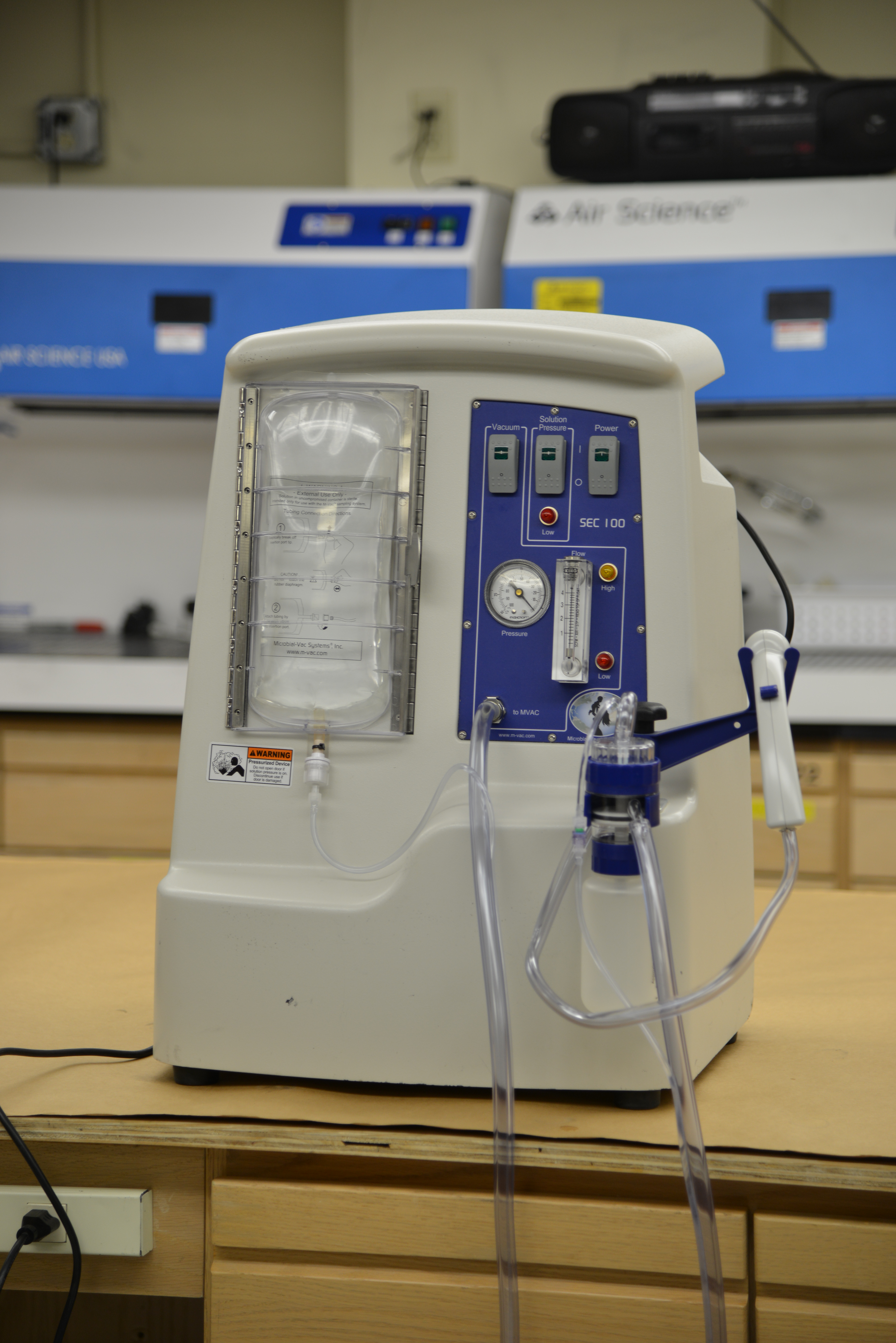 Does every case work out this way? Of course not. But more and more cases that had almost zero chance of obtaining a valid forensic DNA profile, let alone being solved, are now moving forward. The M-Vac System is a tool that every law enforcement agency and crime lab needs access to, and most need their own. Many times the investigation is time sensitive, and the relatively small investment made in purchasing an M-Vac would pale in comparison to that moment. As we have been told time and time again by our friends in law enforcement, if an agency can solve even one case with the M-Vac that otherwise may not have been solved, the system more than pays for itself. Everything after that is bonus. So the question is – is there an M-Vac near you?
 mvacblog